The core function of the ServiceBoard is ticket management. Customer inquiries, orders, and internal tasks are managed here as tickets.
Create a ticket
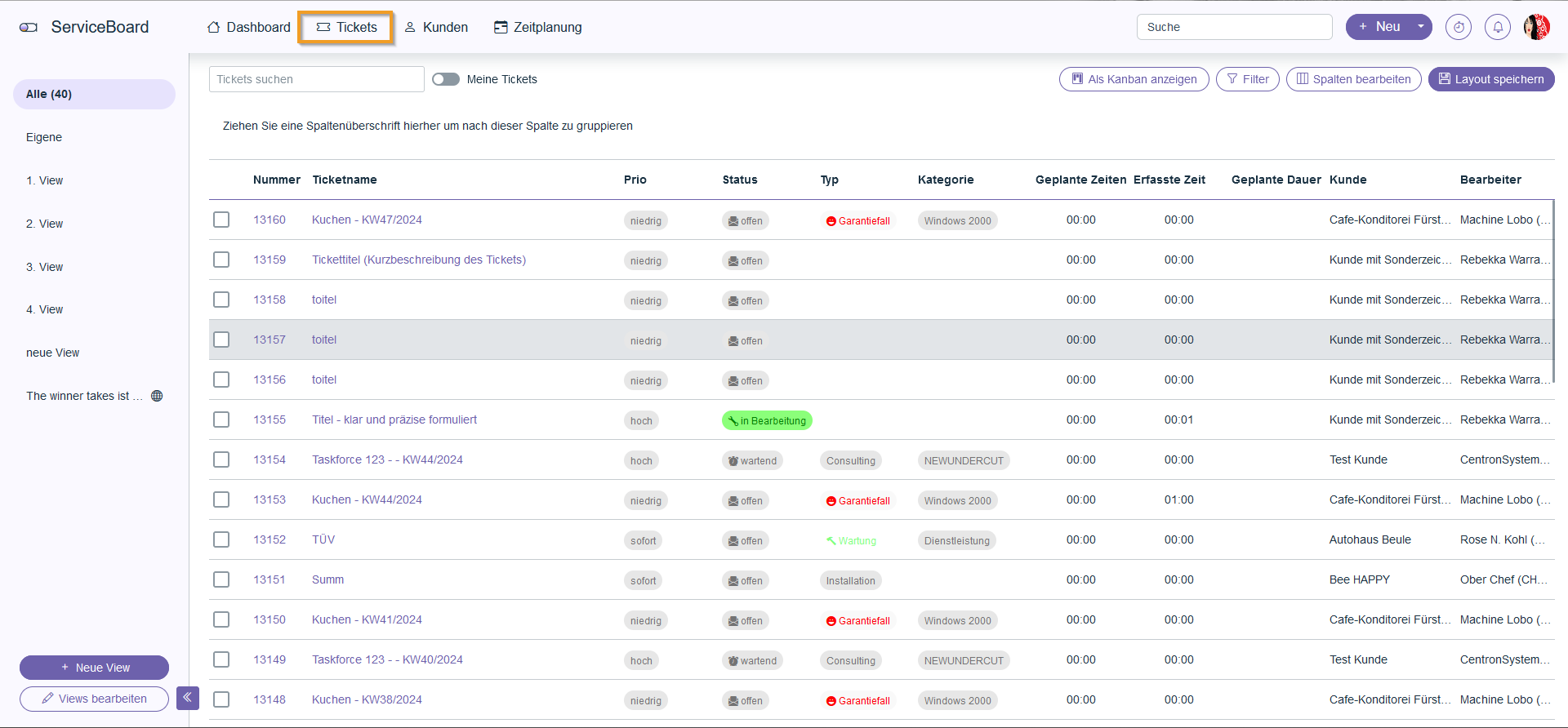
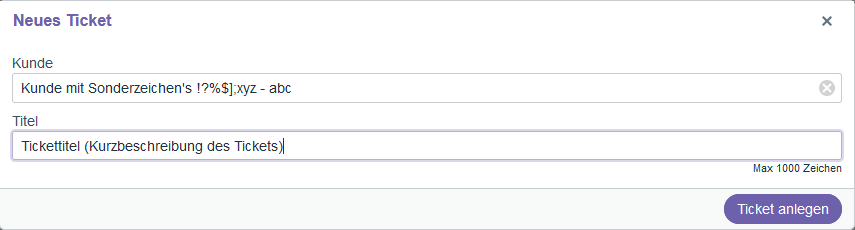
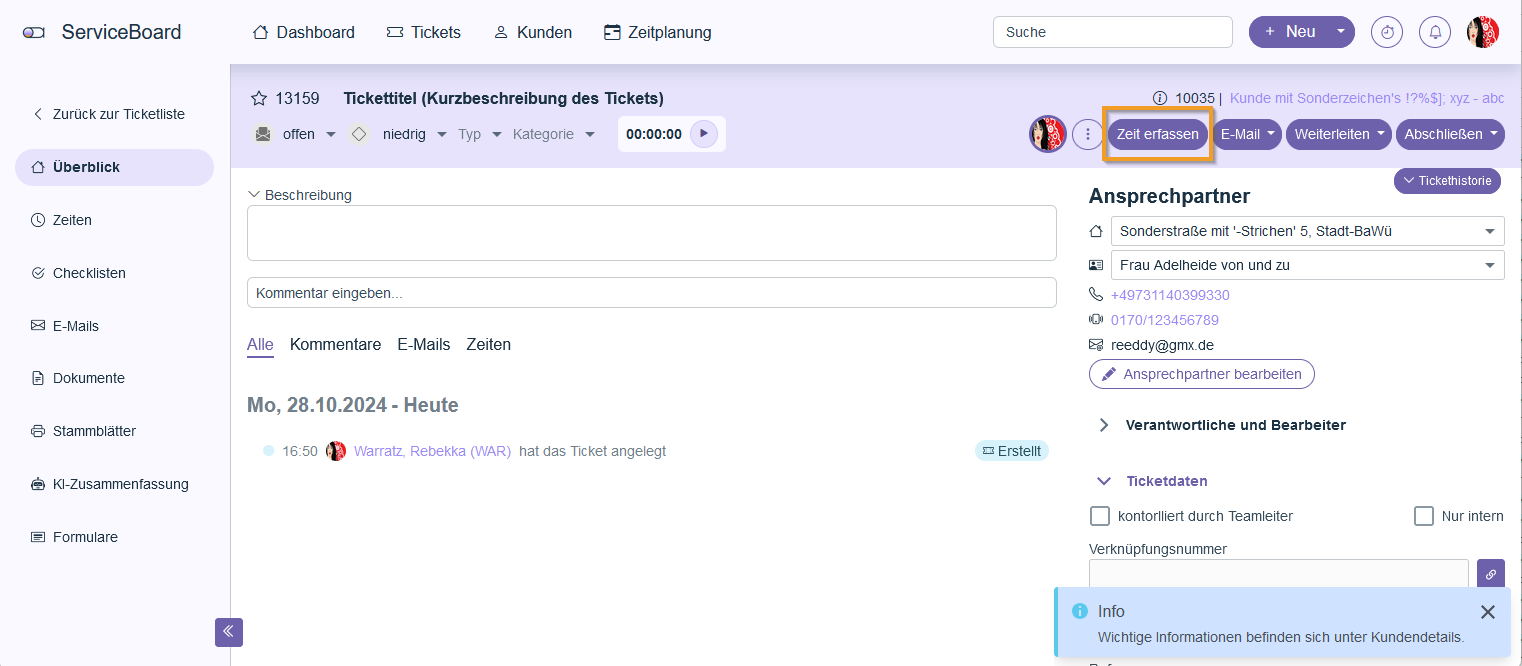
You can create a ticket directly from the dashboard or via the ticket overview by clicking the "New" button.
Once you have located the customer (and the appropriate contact person), the following fields are important when creating a ticket:
Title: The ticket title should be clear and concise and should not exceed 100 characters. In the advanced settings, text templates can be used to quickly create standard titles.
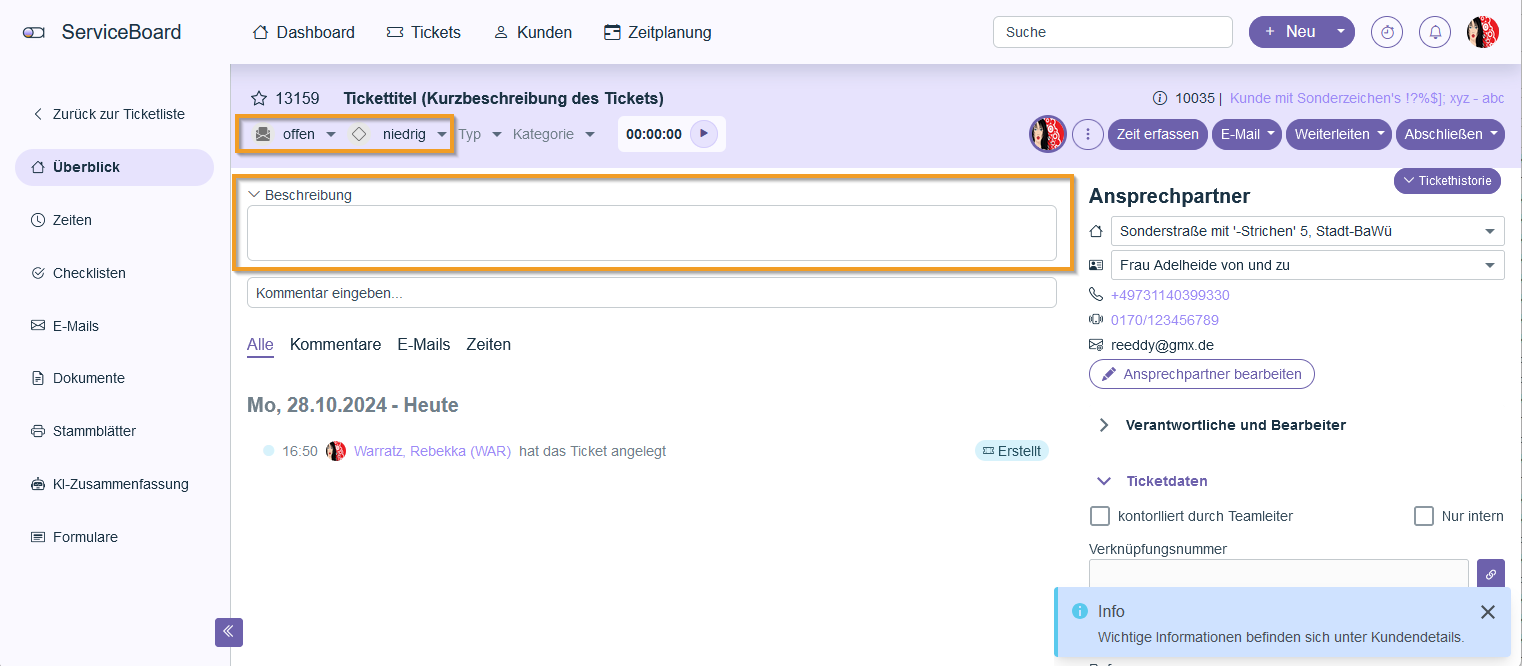
Description: The problem or task is described in detail here. We recommend providing as much information as possible so that the ticket can be processed quickly and efficiently.
Priority and status: Each ticket is assigned a priority (low, medium, high) and a status (open, in progress, closed). This information determines how the ticket is handled going forward.
Time tracking and stopwatches
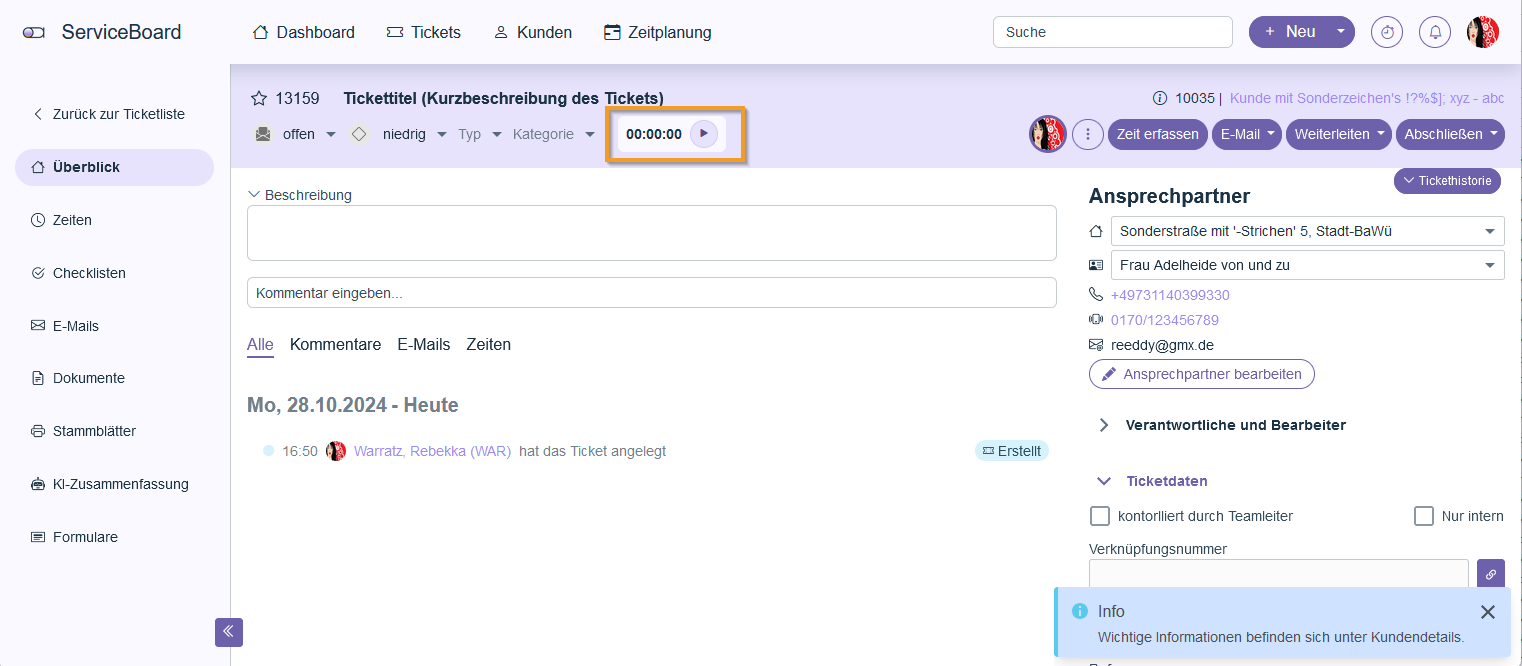
While processing a ticket, time can be tracked using a built-in stopwatch.
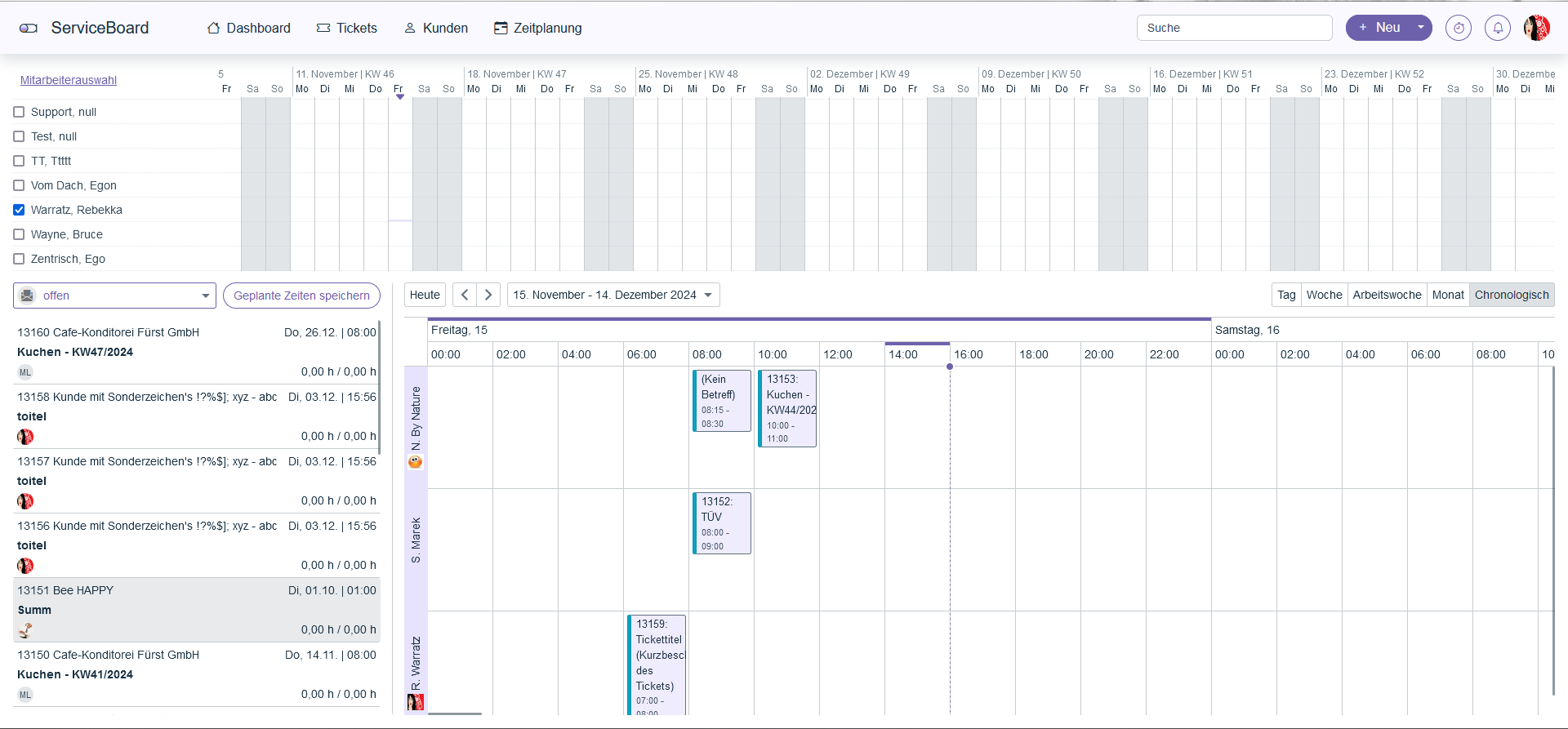
The recorded times can be edited manually or billed automatically at a later time. Using the scheduling feature, tickets can also be entered directly into the calendar and work hours can be assigned to them.
Forward tickets
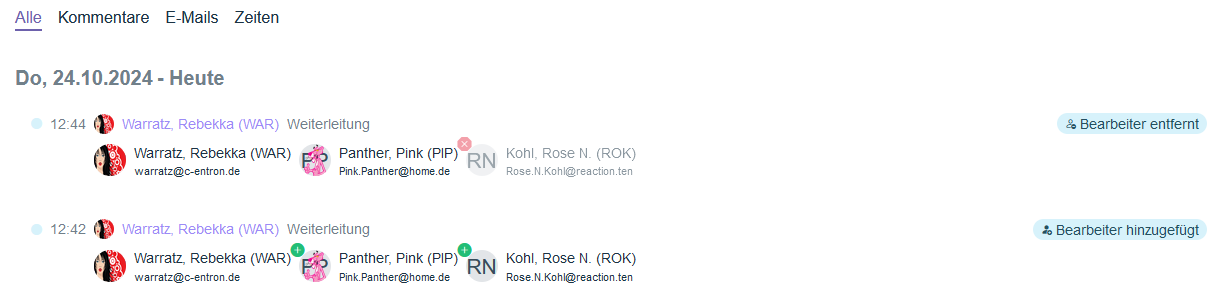
Tickets can be assigned to other employees within the system. The ticket’s current status is carried over, so that the assigned agent can continue to track the ticket’s history.
2. Scheduling
The scheduling feature in the new ServiceBoard makes it easy to schedule tickets accurately. The following functions are available:
Scheduling permissions
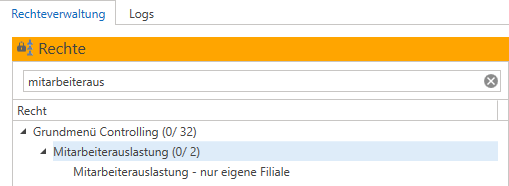
To take full advantage of the schedule, three rights are relevant:
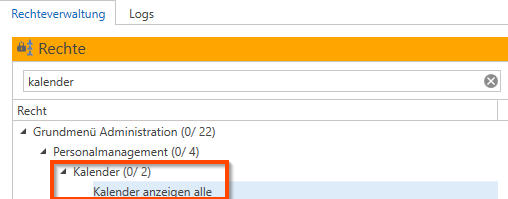
Oberrecht Calendar
View calendar: This permission allows access to the user's calendar. If you want to display only the user's own calendar, there is a restricted permission called "View Only Own Calendar." This prevents the user from viewing other employees' calendars.
Employee utilization: To view other employees' workload and their schedules in the calendar, the permission to view employee workload must be enabled.
Display of daily utilization
Once the appropriate permissions have been set, you can view both your own availability and that of your colleagues. The calendar displays availability using color-coded markers, so you can quickly see which employees are still available.
Schedule a ticket
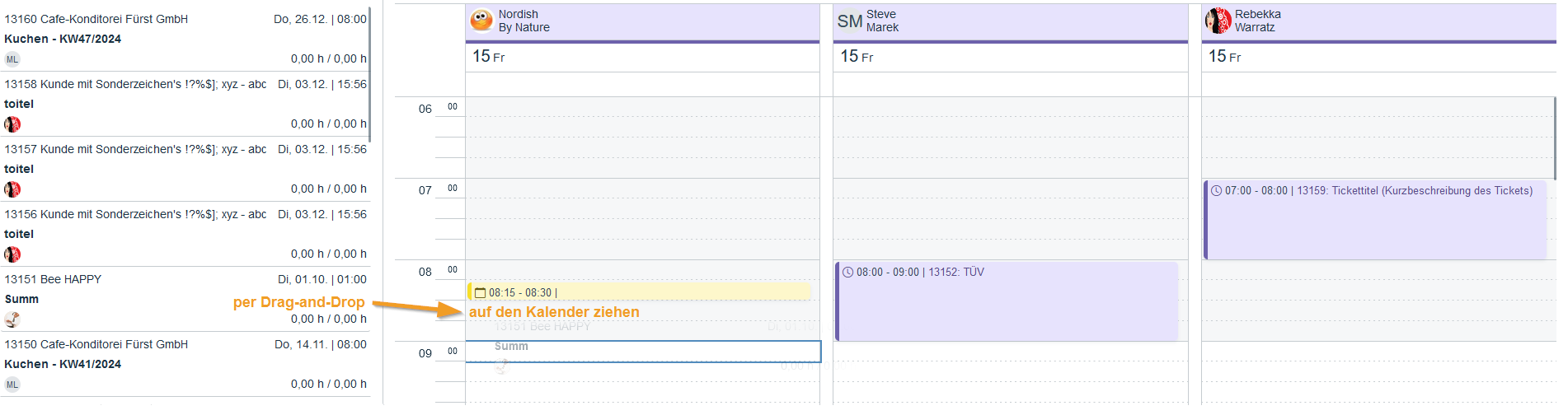
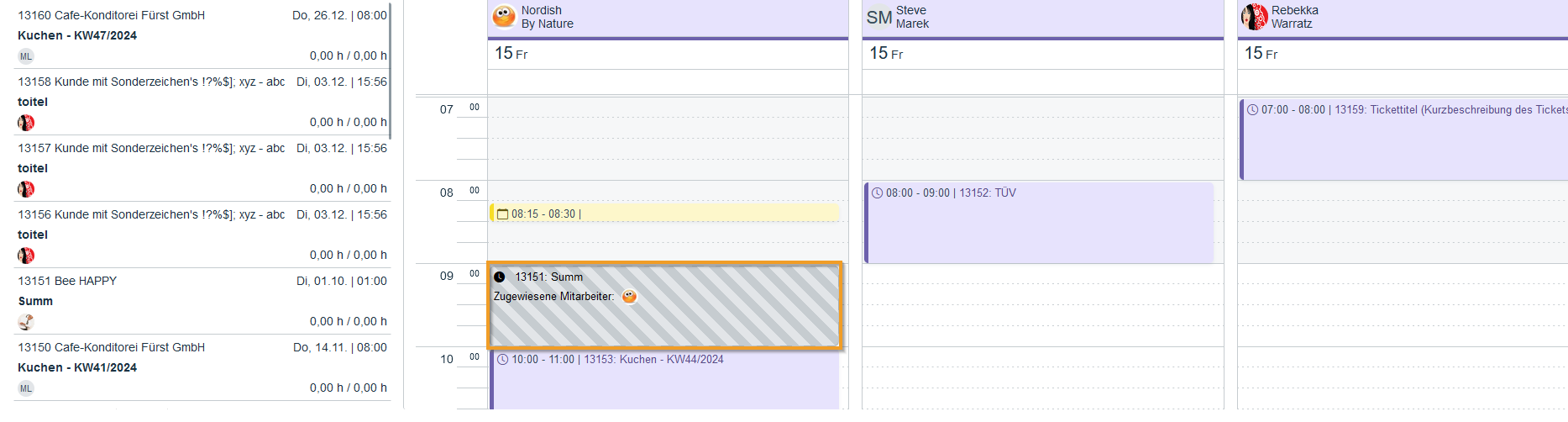
Using the scheduling feature, you can set a scheduled time for each ticket. The following process is used:
Tickets with the corresponding status are displayed and can be dragged and dropped onto the calendar.
Dragging a ticket onto a calendar automatically creates a scheduled time slot.
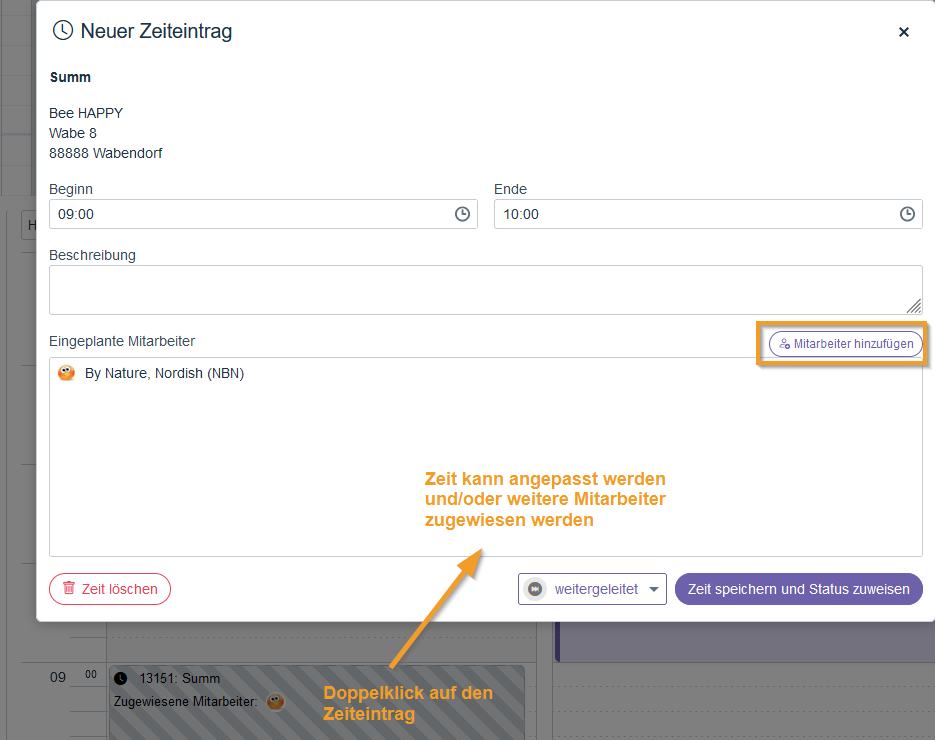
Double-clicking on the time entry allows you to adjust the time or assign additional employees.
Editing time entries
You can open and edit any time entry by double-clicking it. This allows you to adjust times, change employees, or add details to the task at a later time.
3. Calendar Synchronization
The new ServiceBoard offers comprehensive calendar integration, particularly with Microsoft Outlook. Thanks to calendar synchronization, appointments and tasks can be seamlessly synchronized between Outlook and the ServiceBoard.
Set up calendar sync
Synchronization is configured in the general settings under "Calendar Sync." There are two modes:
Sync all events: This process transfers all appointments from Outlook to ServiceBoard and vice versa.
Sync only scheduled appointments: In this mode, only scheduled appointments are synced, so tickets that have already been closed will not appear again in Outlook.
Link to time entries
Every calendar entry created in ServiceBoard is directly linked to a time entry. This means that changes made to the calendar automatically affect the time entries in the ticket. This link provides a comprehensive overview of scheduled and actual hours worked.
4. Using the c-entron ServiceBoard
Once successfully installed and configured, the Service Board offers a wide range of features to support your daily work.
Dashboard
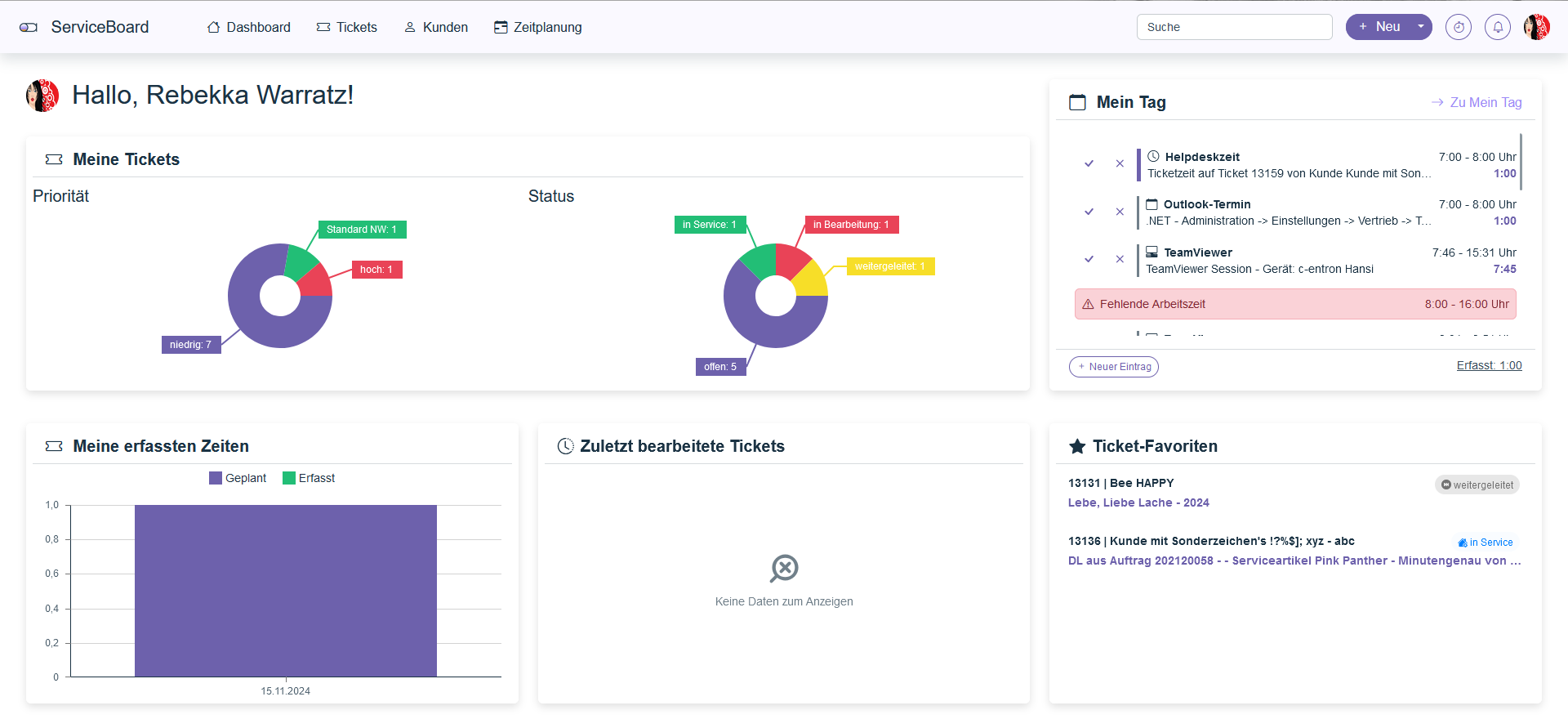
The dashboard is the central overview of ServiceBoard and provides quick access to relevant information and work data:
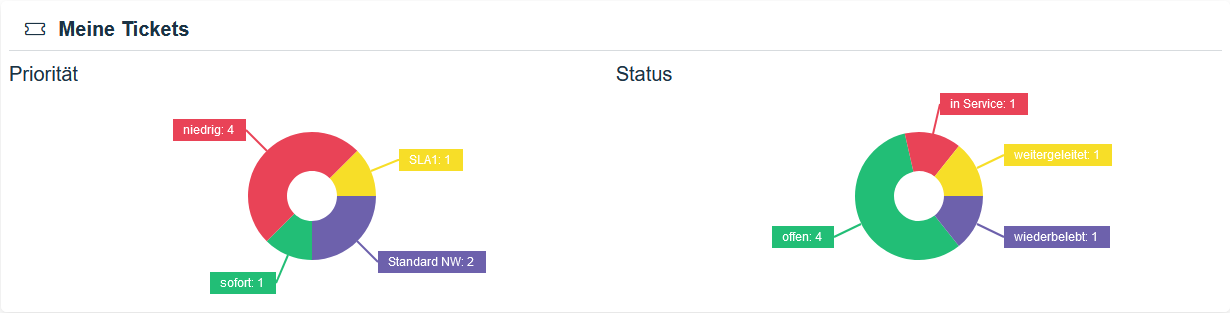
My tickets:
In this section, you will see All open tickets where you are listed as the owner or assignee. Tickets will be available at two charts shown – one shows the distribution by Priority, the other one after Status. This gives you a clear overview at a glance of open, pending, or scheduled tickets, as well as their priority levels. This makes it easier for you to quickly assess your current workload.
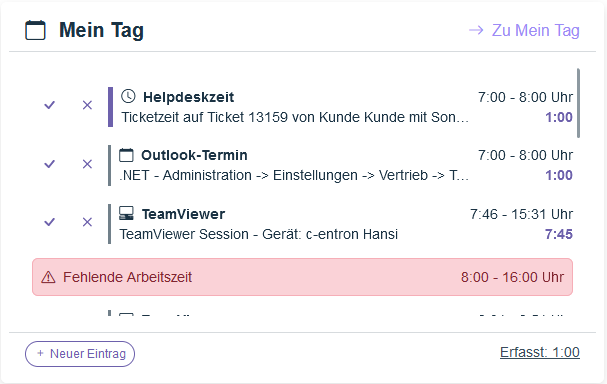
My Day:
The "My Day" feature is fully integrated into the dashboard and replaces the previous menu function. It provides a central overview of your daily activities, such as TeamViewer sessions, phone calls, and Outlook appointments, which are automatically detected and can be added with a single click.
You can also manage and review your recorded work hours. Both automatically recorded (ticket/help desk) times and manually added entries are clearly displayed. Missing work hours are clearly highlighted, so you can easily add or correct them. This integration provides a clear structure and makes it easier to organize your daily tasks and appointments.
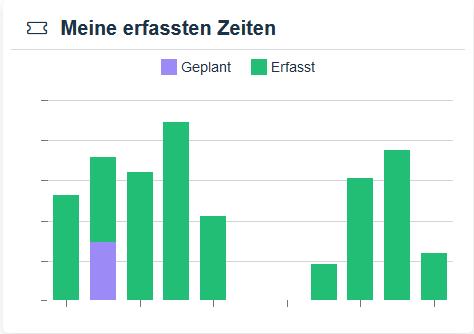
My recorded times:
This feature provides an overview of your recorded and scheduled working hours for the current day. You can see at a glance whether you have already met your daily working hours requirement—for example, 8 hours. This provides valuable support for your daily planning and allows you to track your time efficiently.
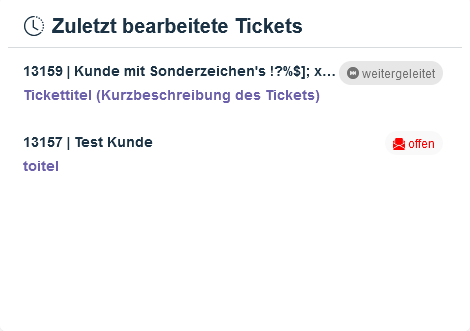
Recently edited tickets:
In this section, you will find a Overview of the tickets you've recently edited. With just one click, you can go directly to the relevant ticket. This gives you quick access to current cases and makes it easier to get back to work without any detours
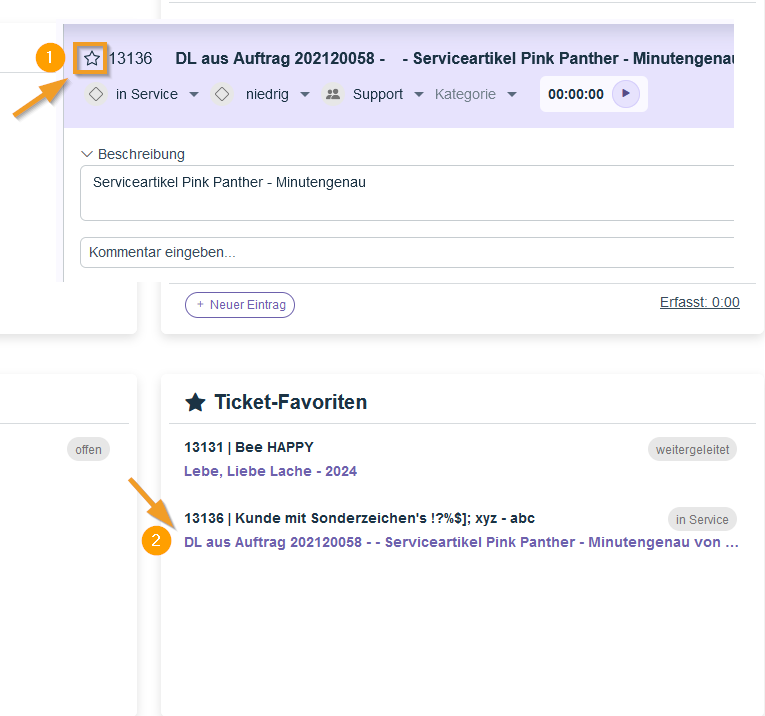
Ticket Favorites:
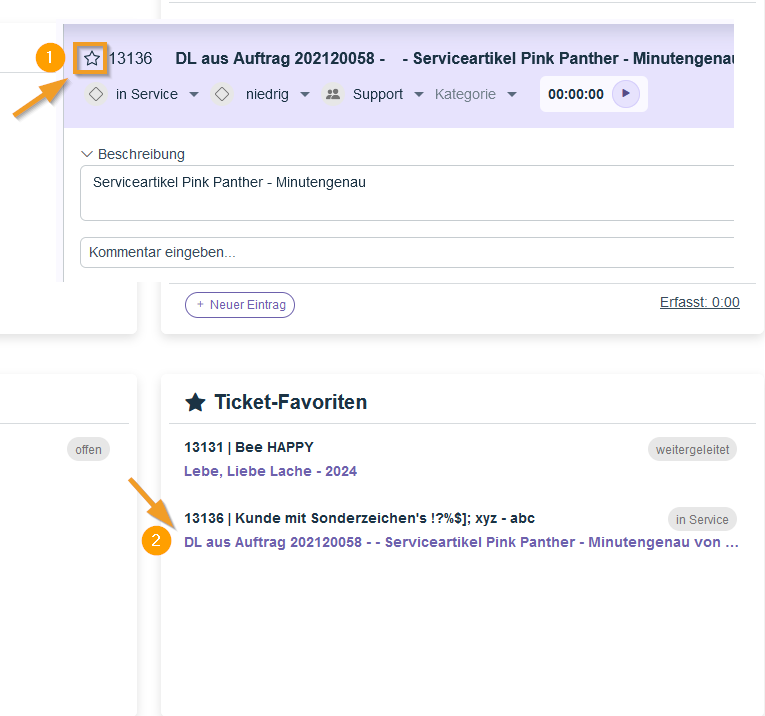
You can easily mark tickets that you need frequently or that are high priority as Favorites Mark them by clicking the star icon in the open ticket. These marked tickets are accessible directly from the dashboard, allowing you to quickly access them and efficiently manage frequently processed cases.
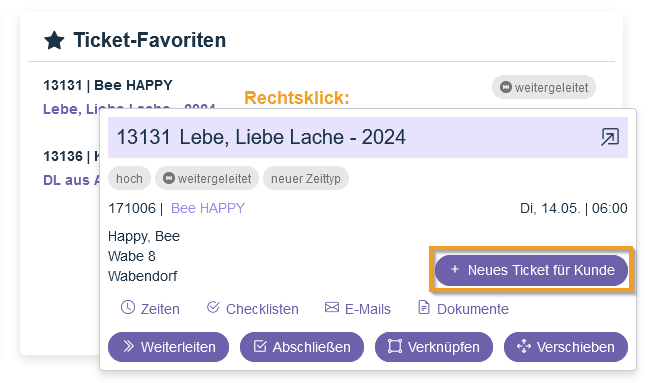
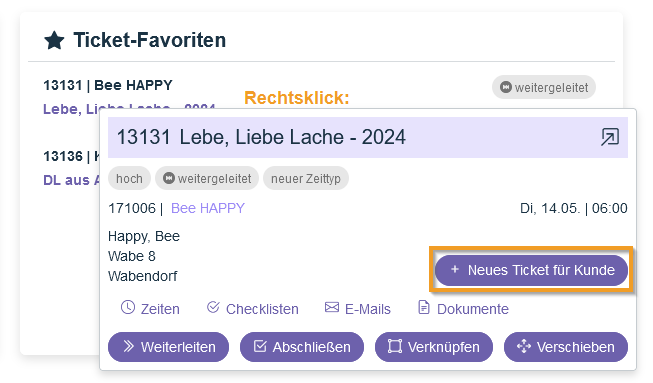
Right-click menu:
You can easily open and edit tickets by right-clicking on them. New tickets can be created directly from your favorites, which makes your workflow even faster.
The Ticket List
The ticket list offers extensive customization options and has been enhanced with new viewing and sorting features:
Views - Custom and global views for tickets:
With the customizable views, formerly known as Dock Panels, allow you to Ticket List customize it to suit your needs. Adjust the size and order of the columns, add new ones, and display important information such as assignee icons or priorities. You can save your changes so that your preferred layout will be retained the next time you use it. You can global views create and save, which also apply to your available to the entire team This way, you can work more efficiently and always stay on top of things.
Filters - Efficient filtering options for your ticket list: With the versatile filter options you can Ticket List narrow down results based on specific criteria, such as customers, priorities, or ticket status. Combine multiple filters to create precise views and save them for easy reuse. Changes to the filters take effect immediately, so you always see the information that’s relevant to you at a glance.
Kanban view – enables flexible work:
Keep your tickets organized with the Kanban view, which can be sorted by status, priority, or type. With a intuitive drag-and-drop feature Tickets can be easily moved between columns (buckets), and their status updates automatically. Customize the view by, for example, hiding columns (buckets) you don’t need, and make your workflow as efficient as possible.
Ticket Details
The ticket details provide a central location for all information and activities related to a ticket:
Live communication:
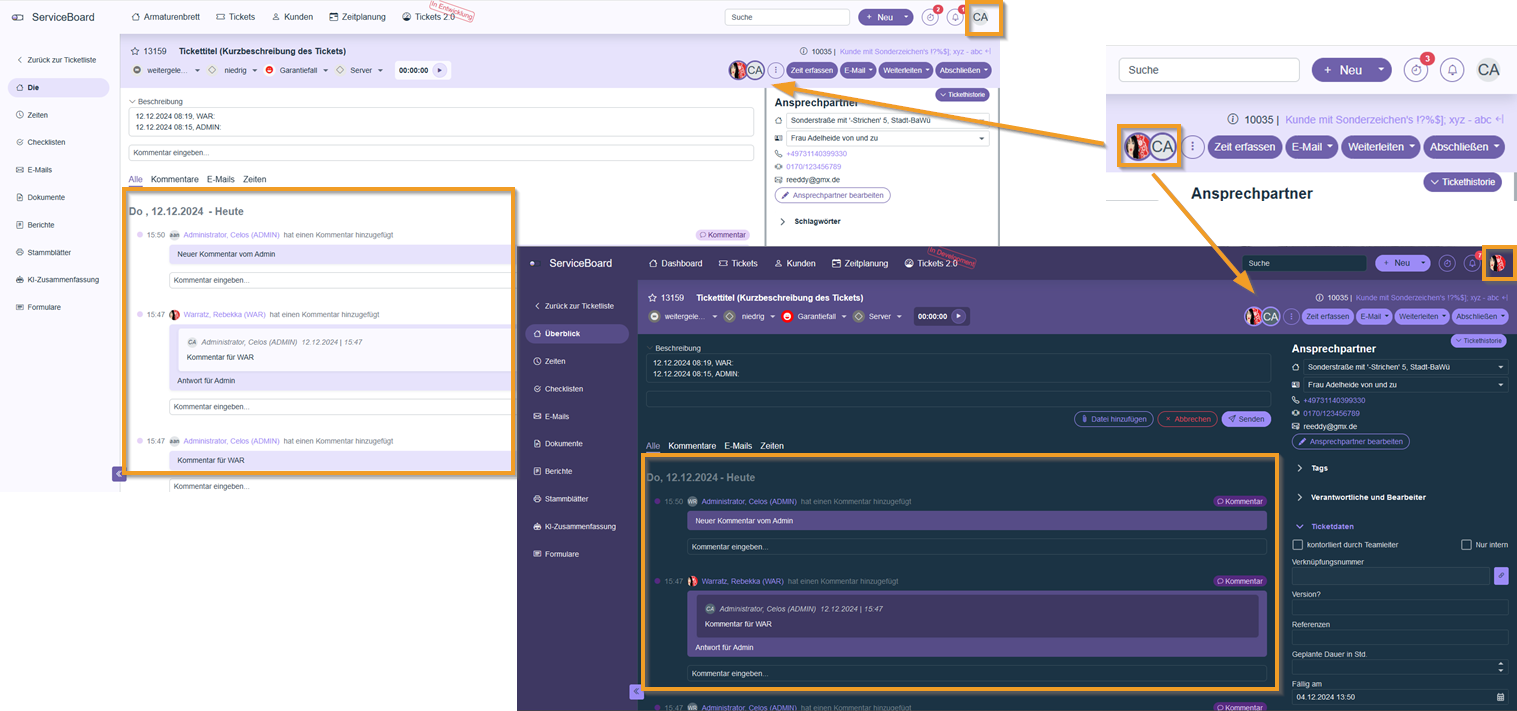
The Live communication enables by multiple users at the same time work on a ticket without any editing locks. Changes and comments are inReal-time synchronized, ensuring that collaboration remains efficient and seamless. Profile pictures of active contributors and time logs are immediately visible, so everyone involved always has a clear view of the current status. These real-time updates promote smooth teamwork, especially when multiple technicians are working on tickets simultaneously.
Comment feature:
With the built-in comment feature Colleagues can communicate directly within the ticket. By using mentions (@Name), specific people are notified and immediately receive a Real-time notification. This feature complements or partially replaces internal notes while remaining flexible and optional, designed to support individual work styles.
Track time:
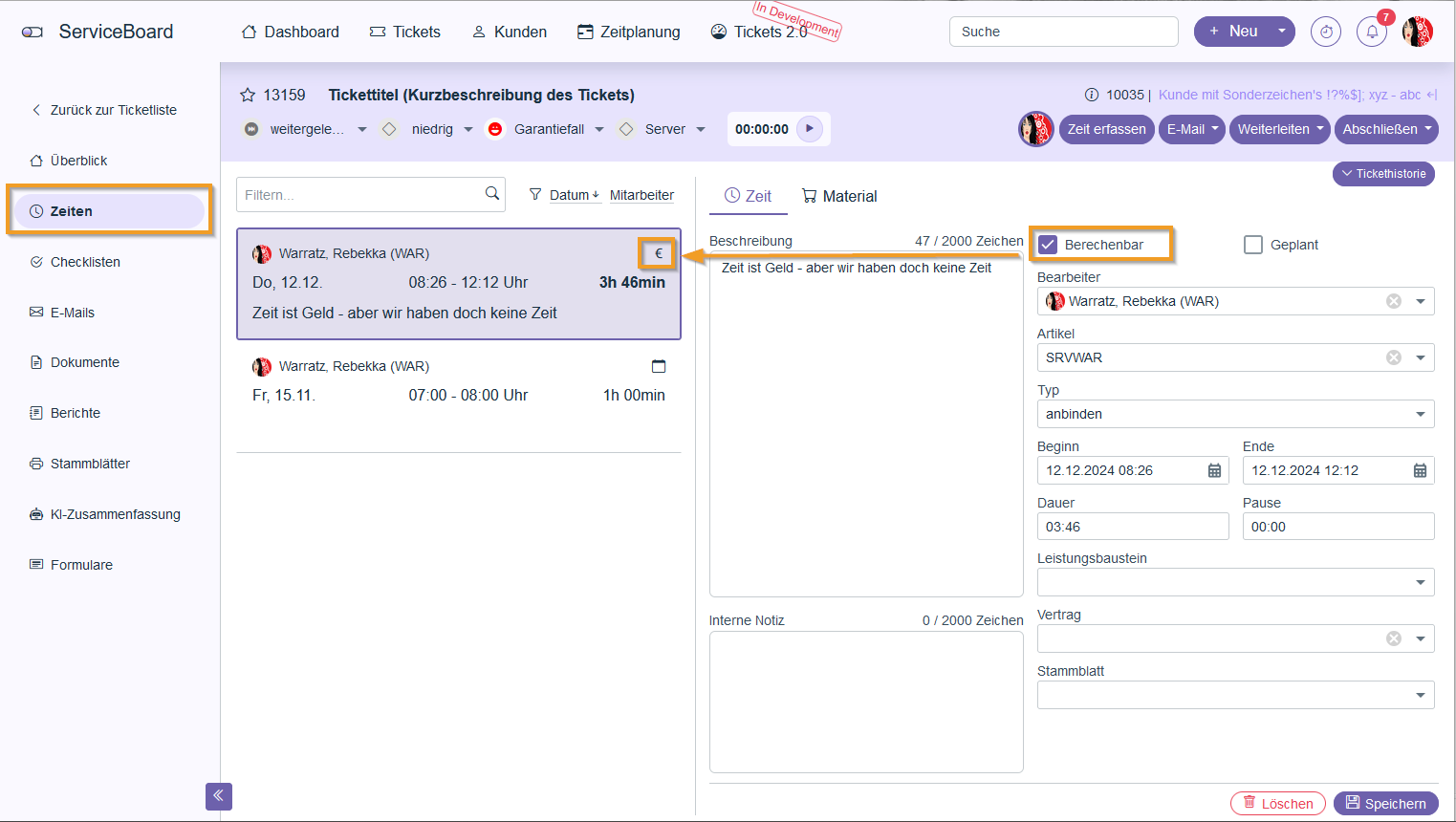
The Time logs are visible directly on the ticket and clearly indicate billable hours using a euro symbol. Hours can be easily added or edited directly on the ticket, making it efficient to track and bill for work performed.
Ticket history:
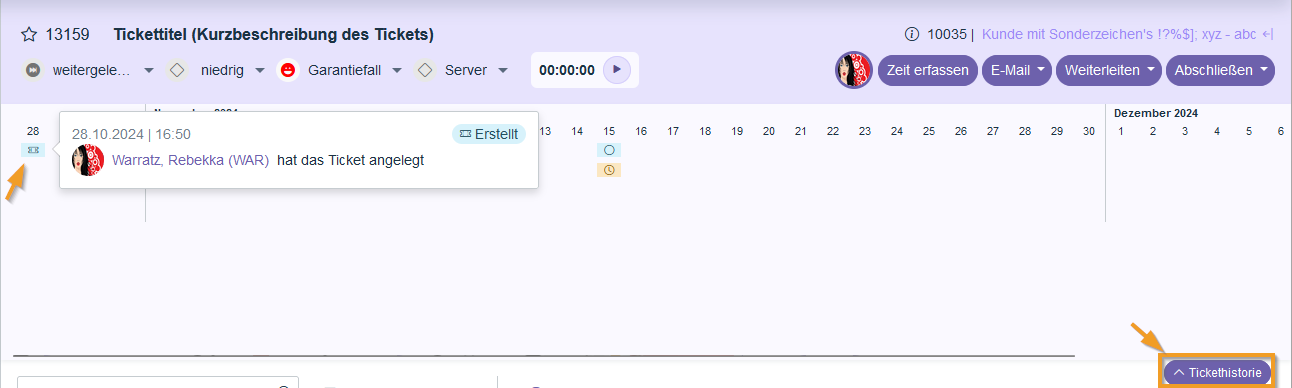
History offers a A comprehensive overview of all past promotions within a ticket, such as changes, recorded times, or sent emails. It effectively supports the tracking and documentation of ticket activities, ensuring transparency regarding the processing history at all times.
Editing contacts:
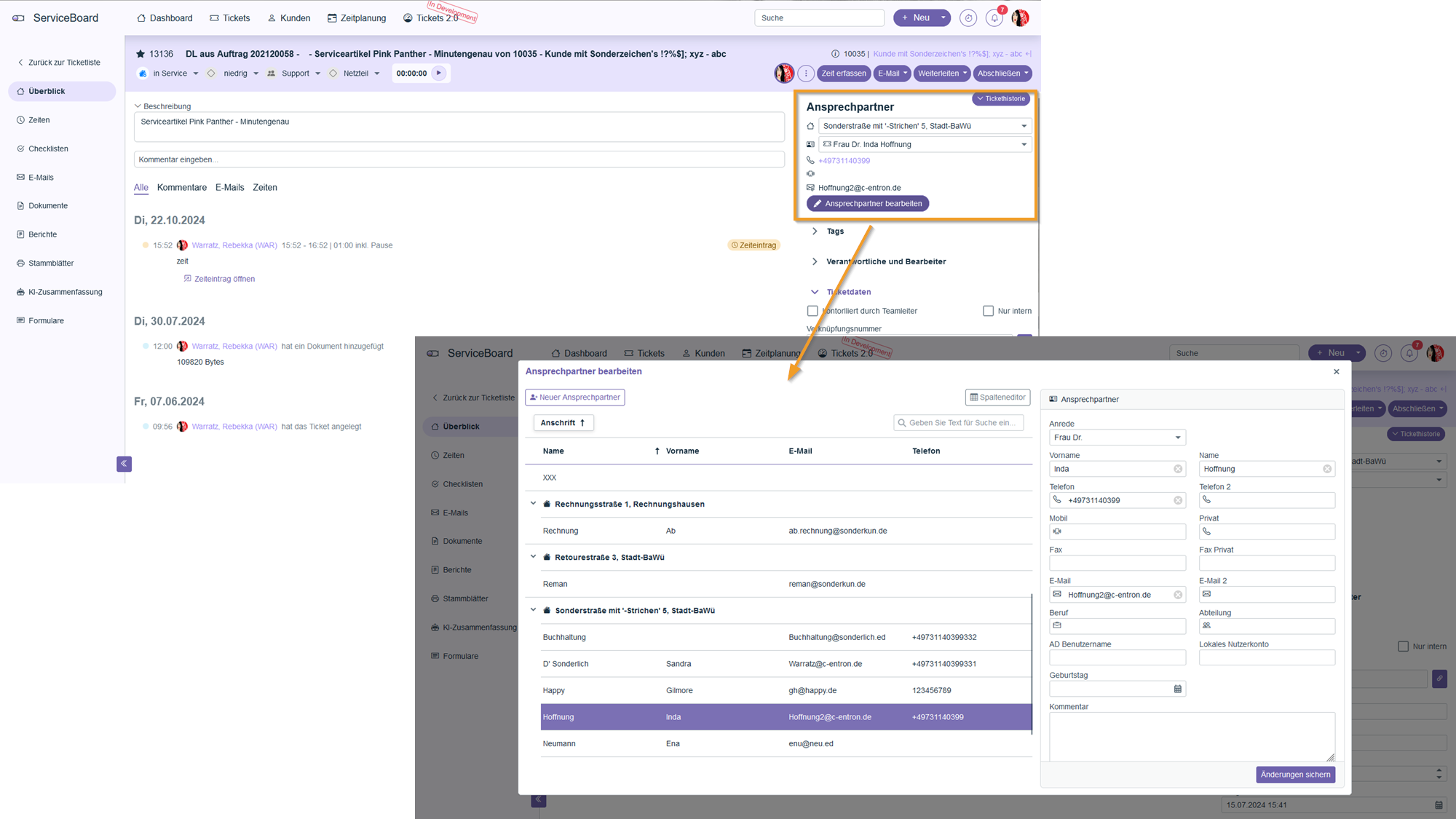
Contact person can directly in the system edited or added depending on the relevant permissions. Changes, such as updating a name after marriage, can be made quickly and easily to ensure that the information is always up to date.
5. Communication and Integration
TeamViewer and Supremo Integration
ServiceBoard offers direct integration with the tools TeamViewer and Supremoto perform remote maintenance quickly and efficiently. To use this integration, you must enter the API keys for the respective tools in your personal settings.
TeamViewer:
The TeamViewer script token is generated in the TeamViewer Management Console and then stored in the employee's personal settings.
Supremo:
An API token must also be stored in the global settings to use Supremo.
Microsoft Teams Integration
ServiceBoard also supports the integration of Microsoft Teamsso that calls and meetings can be managed directly through the ServiceBoard. This feature is made possible by integrating the Microsoft Graph API. In the API settings, the "Calendars Read/Write" and "Call Records Read All" permissions must be enabled.
6. Additional Features and Settings
Icons and Color Scheme
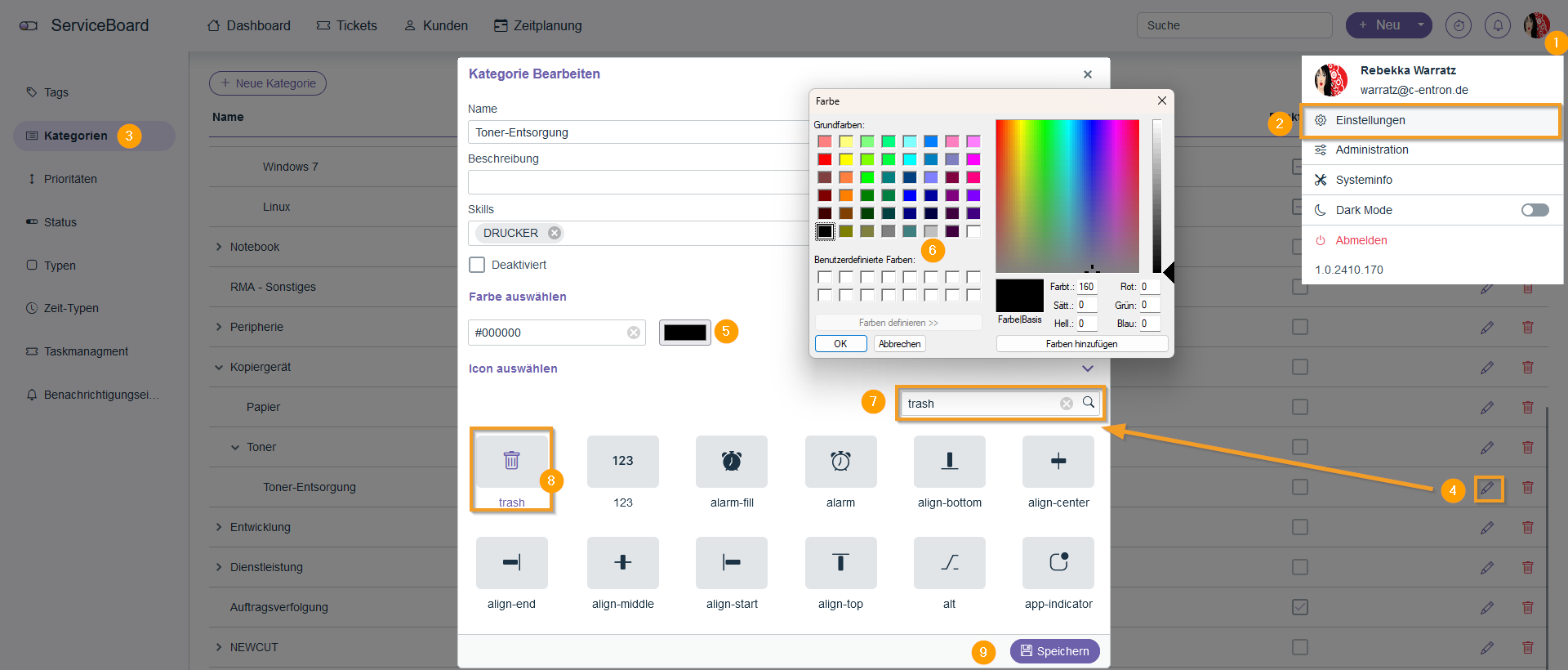
Categories and priorities can be assigned icons and colors to help you identify tickets more quickly in the overview.
Dark Mode
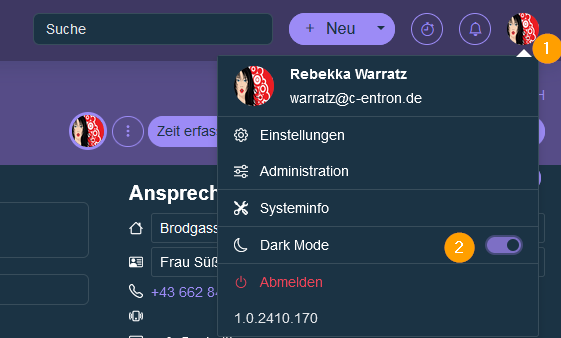
To reduce eye strain, you can switch the entire service board to Dark Mode.
System Information
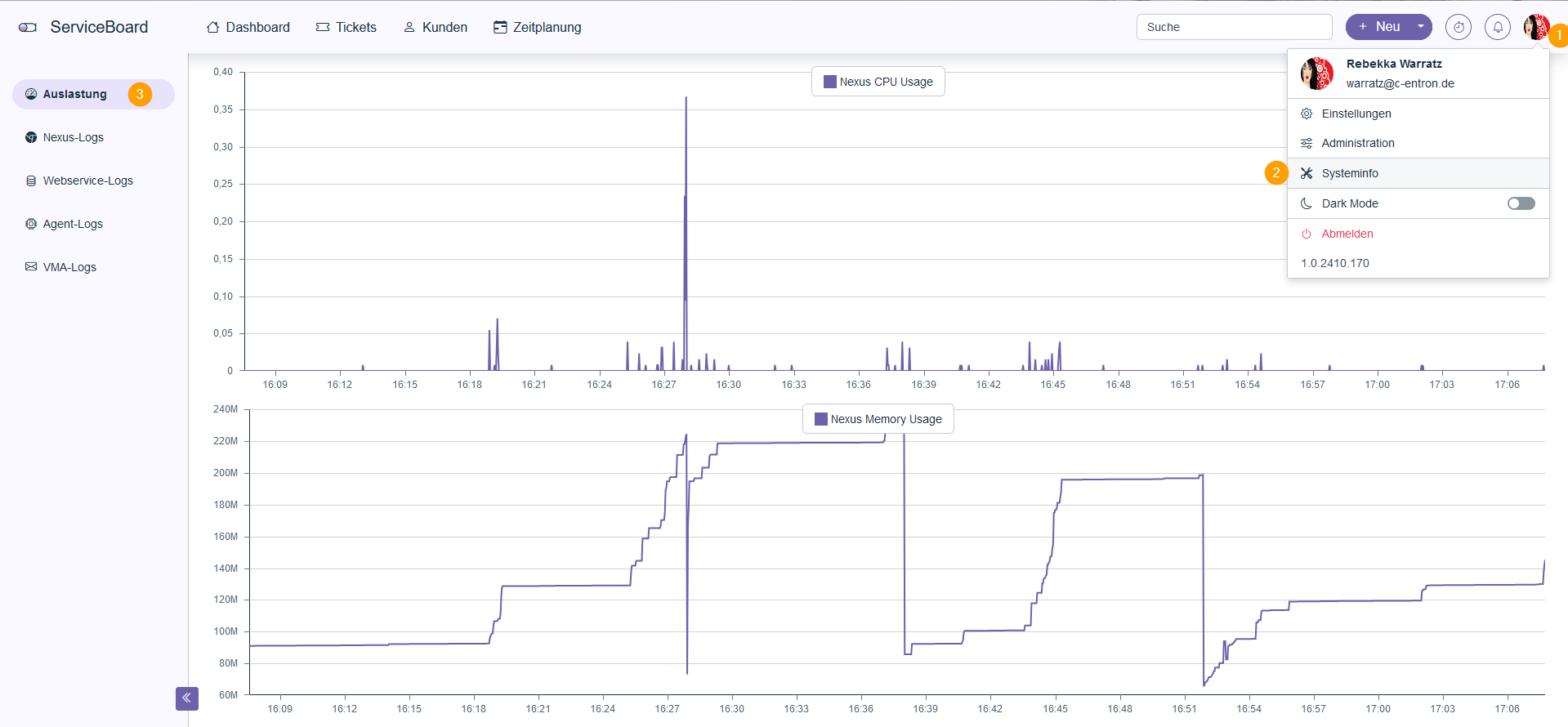
Administrators have access to system information such as system load and log files. This information helps them monitor system performance and diagnose problems.
7. Reports and Analyses
The new ServiceBoard allows you to create Service Reports directly from the ticket. These reports contain all relevant information recorded while the ticket was being processed, including the times logged, comments, and any attached files.
Create a service report:
The report can be generated and sent to the customer either immediately upon closing a ticket or at any time during the processing of the ticket.
Attached files:
Any files added to a ticket can be automatically attached when the service report is sent.
6. User-friendly features
Favorites
Important tickets can be marked as favorites for quick access. This makes it easier to manage and process particularly urgent or recurring tasks.
Quick Access to Tickets and Time Entries
Each time entry and each ticket can be opened and edited with a simple double-click. This feature saves time and allows you to quickly access important information.
Summary
The new ServiceBoard offers a centralized solution for ticket management, scheduling, and integration with other tools such as Microsoft Teams and TeamViewer. Thanks to its flexible configuration options and the tight integration of calendar and ticket data, all tasks can be efficiently planned and processed. Direct synchronization with Outlook and comprehensive permission and role management ensure optimal adaptation to your company’s specific needs.
JavaScript errors detected
Please note, these errors can depend on your browser setup.
If this problem persists, please contact our support.
%20(1).png)